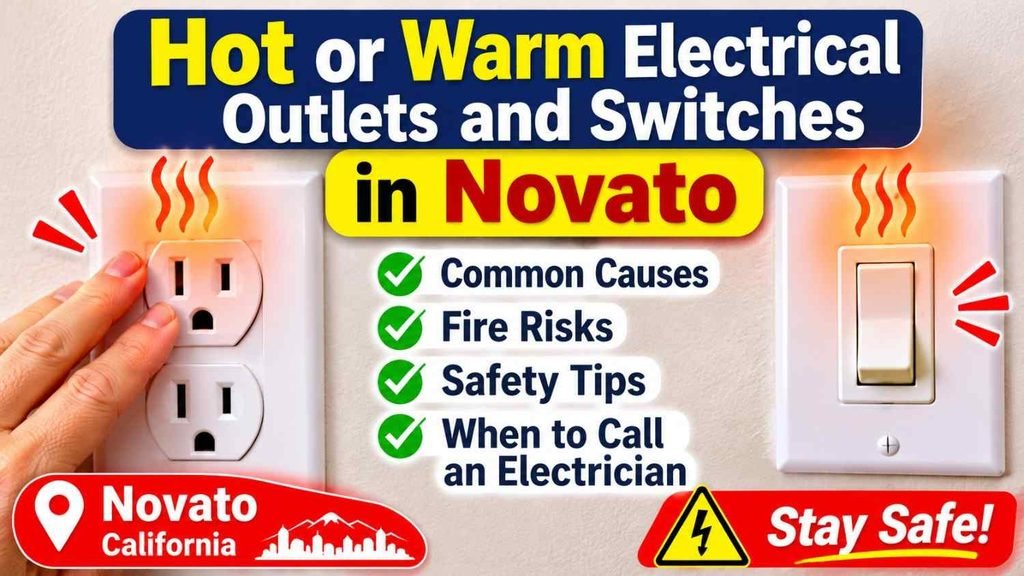
Hot or Warm Electrical Outlets and Switches in Novato
Know when warm is normal, when it is a warning, and what to do next.
Get Emergency Help in NovatoIf your hot or warm electrical outlets and switches in Novato homes worry you, trust that feeling. A slightly warm cover plate can be normal. A plate that feels hot, smells like burning, or looks brown is not normal. Stop using it and call a licensed electrician.
This guide explains why outlets and switches heat up, how to check them safely, and what to do next. If you need quick help, see our page on emergency electrical problems in Novato.
Act now if you notice any of these:
- The outlet or switch is hot to the touch.
- You smell burning plastic.
- You see brown or black marks, melting, or sparks.
- You hear buzzing, crackling, or sizzling.
Turn off the breaker for that circuit if you can reach the panel safely. Keep people and pets away. If you see smoke or flames, leave and call 911.
Is It Normal for an Outlet or Switch to Feel Warm?
Sometimes, a little. Electric current can make a switch plate slightly warm. UL Solutions advises that if an outlet is uncomfortably hot, you should turn off what is plugged in and try it in another outlet. Dimmer switches also run a bit warm because they manage power.
| What you notice | Likely meaning | What to do |
|---|---|---|
| Dimmer switch slightly warm | Often normal | Check it is not overloaded. Watch it. |
| Plate warm only after heavy appliance use | Possible overload or worn contacts | Unplug the device. Call an electrician if it repeats. |
| Outlet hot to touch | Unsafe condition | Stop using it. Switch off the breaker. |
| Burning smell, discoloration, or sparks | Serious fault | Shut off power. Call an emergency electrician. |
Why Is an Electrical Outlet Getting Hot in Novato?
Heat means resistance. Something in the path of the current is working too hard. Here are the usual causes.
Loose Wiring Causing Hot Electrical Outlets
Wires can loosen at the screws or push-in connections over time. A loose connection makes a tiny gap where electricity jumps and creates heat. This is one of the most common causes, and it can happen quietly behind the wall. Loose wires also cause flickering. Read more in our guide to flickering and dimming lights.
Overloaded Circuits
Space heaters, microwaves, and hair dryers pull a lot of power. If several run on one circuit, wires and devices heat up. You may also see breakers trip, which is explained in why a circuit breaker trips.
Worn or Damaged Outlets
Outlet contacts lose grip after years of plugging and unplugging. If plugs feel loose, the poor contact creates heat. Cracked faces and old outlets are also risks.
Wrong or Damaged Devices
A switch or outlet rated too low for the load will overheat. Damaged plugs and cords do the same. Using a cheap extension cord on a heater is a common mistake.
Aluminum or Aging Wiring
Older homes may have outdated wiring that does not handle modern loads well. If your home is older, ask an electrician to inspect it. We cannot tell the age or wiring type of your home without a visit.
| Cause | Where heat shows up | Fix |
|---|---|---|
| Loose connection | One outlet or switch | Re-tighten or replace by an electrician |
| Overloaded circuit | Several outlets, breaker trips | Move devices, add a circuit |
| Worn outlet | Plug feels loose and warm | Replace the outlet |
| Low-rated device | Switch or dimmer | Install the correct rating |
Warm Electrical Outlet When Plugged In
If an outlet feels warm only when something is plugged in, test it. Unplug the device and plug it into another outlet. If the device plug is hot, the cord or plug may be bad. If the outlet stays hot with nothing connected, the outlet or wiring is the problem.
Outlet Feels Warm When Using Appliances
High-wattage appliances are the usual trigger. A warm plate near a space heater, air conditioner, or kettle suggests the circuit is stretched. Run big appliances on their own circuit when possible. Do not use power strips for heaters.
Light Switch Getting Hot
A hot light switch usually points to a loose wire, a worn switch, or too much load on a dimmer. For example, replacing old bulbs with a much larger total wattage can overheat a dimmer. Turn off the switch and the breaker. Do not keep using a hot switch. Switch problems can also lead to sparks. See our page on sparking outlet and switch repair.
Burning Smell from a Hot Electrical Outlet
A burning smell means plastic or insulation may already be damaged. Do not wait to see if it goes away. Cut power at the breaker, keep the area clear, and call for help. Our guide to a burning smell from an outlet or panel covers what to check.
Electrical Outlet Heat and Fire Risk
Heat can melt insulation and ignite nearby materials. The Electrical Safety Foundation International shares facts on home electrical fires and recommends having a qualified electrician inspect your home. It also says outlets and switches that run warm should not be ignored. Treat heat as a warning sign, not a quirk.
How to Fix an Overheating Electrical Outlet in Novato
Fixing the cause means working inside the wall, which is not a DIY job for most people. Here is the safe order of steps.
- Unplug everything from the outlet. Use a dry hand.
- Turn off the breaker for that circuit.
- Do not touch bare wires or open the cover unless you are trained.
- Leave the circuit off and use another outlet temporarily.
- Call a licensed electrician to find the cause and repair it.
Example: A living-room outlet feels warm each winter evening. A space heater and a TV share it. The heater is the load, and the outlet contacts are worn. Moving the heater to a different circuit may help in the short term, but the worn outlet still needs replacing.
Common Mistakes to Avoid
- Ignoring a warm outlet because “it still works.”
- Using a power strip or thin extension cord for heaters.
- Swapping the outlet yourself without turning off the breaker.
- Resetting a tripping breaker again and again. See what to do when a breaker keeps tripping.
- Covering the outlet with furniture or curtains while it is hot.
How to Prevent Hot Outlets and Switches
- Spread heavy appliances across different circuits.
- Replace outlets that grip plugs loosely.
- Check plates monthly with the back of your hand.
- Replace damaged cords and plugs.
- Book an inspection if your home is older or you added big appliances.
For more habits, see our home electrical safety tips, the wider home electrical safety guide, and our home electrical guide. For other issues, browse common electrical problems in Novato.
When to Call an Emergency Electrician in Novato
Call right away if heat comes with a burning smell, sparks, or discoloration, or if a breaker will not stay on. Choose a licensed contractor. In California, electrical contractors hold a C-10 license from the state. Ask to see it. We cannot state prices here because the cost depends on the cause and the work needed.
Contact Emergency Electrician Novato
Conclusion
Warm outlets and switches in Novato homes are not something to wait on. A little warmth on a dimmer can be fine, but hot plates, smells, marks, or sounds mean stop and call a pro. Turn off the circuit, keep it off, and get it checked.
Frequently Asked Questions
Why is my electrical outlet getting hot in Novato?
Common causes are loose wiring, overloaded circuits, worn outlet contacts, and damaged plugs. Any of these adds resistance, which makes heat.
Is a warm outlet dangerous?
A slightly warm plate may be harmless. A hot outlet is a warning sign and should be checked by a licensed electrician.
Why does an outlet feel warm when plugged in?
The device may be drawing a lot of power, or the plug may fit loosely. Try another outlet to see if the heat follows the device.
Can a light switch get hot?
Yes. Dimmers can run slightly warm, but a hot switch usually means a loose wire, worn switch, or too much load.
Should I unplug things from a hot outlet?
Yes, if it is safe to do so. Use a dry hand and do not touch if you see sparks or melting. Turn off the breaker first in that case.
What does a burning smell from an outlet mean?
It can mean overheated insulation or plastic. Shut off the circuit and call an electrician.
Can loose wiring cause a hot outlet?
Yes. Loose connections create resistance and heat, and it is a leading cause of overheating outlets.
Can I fix an overheating outlet myself?
Most people should not. Turning off power and unplugging devices is safe. The repair should be done by a licensed electrician.
Can overheating outlets start a fire?
They can. Heat can damage insulation and ignite nearby materials, so do not keep using a hot outlet.
Is it safe to use a power strip on a warm outlet?
No. Stop using that outlet until it is checked. Never plug heaters into power strips.
How do I know if a circuit is overloaded?
Signs include warm plates, tripping breakers, and flickering lights. Fewer devices on the circuit usually helps, but have it checked.
When should I call an emergency electrician?
Call immediately for heat with burning smells, sparks, discoloration, buzzing, or a breaker that will not stay on.