
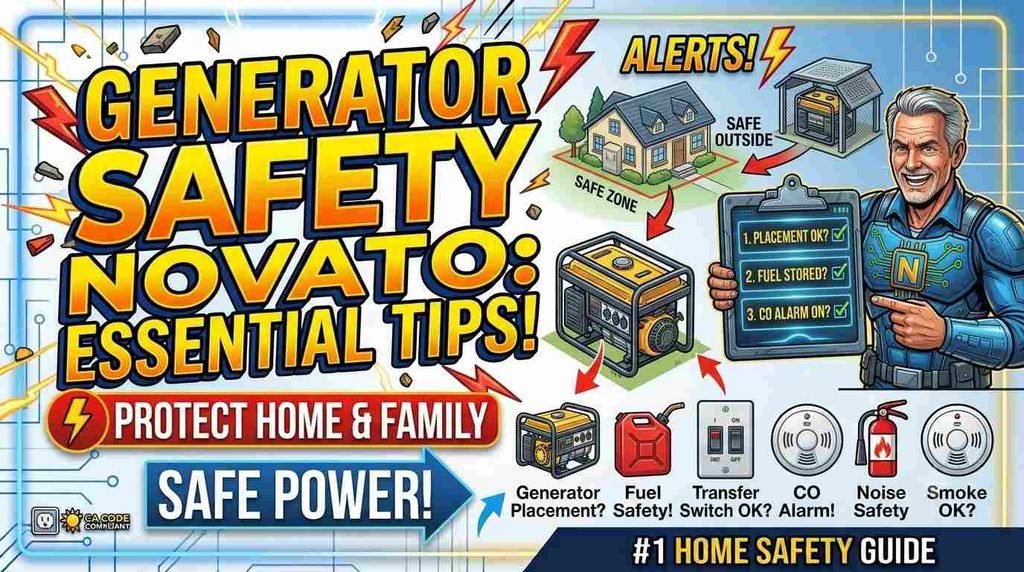
Quick answer: Generator safety in Novato comes down to four habits. Run it outside, keep it far from the house, connect it the right way, and never overload it. Flip the switches on the panel to see why a safe setup matters.
Get emergency electrical help
Power outages are stressful. A generator can keep your fridge cold and your lights on, but it can also hurt you if you use it the wrong way. This guide covers generator safety in Novato in plain language, from where to place the unit to how to connect it. If you want a bigger picture first, read our home electrical safety guide for Novato.
Why Generator Safety in Novato Matters
Novato homes can lose power during storms, equipment failures, and planned shutoffs. When that happens, many homeowners rush to start a generator. Rushing is where mistakes begin.
Generators cause three main dangers: carbon monoxide poisoning, electric shock, and fire. The U.S. Consumer Product Safety Commission (CPSC) reports that CPSC portable generator carbon monoxide report estimates nearly 80 people die each year in the U.S. from CO poisoning linked to portable generators.
The good news is that almost every one of these risks is preventable. You can learn more about local outage causes on our Novato power outages page.
Generator Safety Tips for Homeowners in Novato
Start with these core rules. They apply to nearly every home.
Stay outside
Run the generator outdoors only. Never in a garage, basement, crawlspace, or shed.
Keep your distance
Place it well away from windows, doors, and vents so exhaust cannot drift inside.
Connect it right
Use a proper transfer switch or heavy-duty cords. Never plug it into a wall outlet.
Respect the limit
Add up the watts you need and stay under the generator’s rating.
Always read the owner’s manual first. It lists the exact fuel, oil, and grounding steps for your model.
Portable vs. Standby Generators
The two types need different safety steps. Here is a simple comparison.
| Feature | Portable generator | Standby generator |
|---|---|---|
| Location | Moved outside when needed | Fixed outdoors on a pad |
| Connection | Cords or a manual transfer switch | Wired to your panel with an automatic transfer switch |
| Installation | Little to none | Licensed professional required |
| Main risk | CO from misplacement, cord misuse, refueling | Poor installation, blocked airflow, skipped maintenance |
Portable Generator Safety in Novato
Portable units are the most common cause of trouble because people set them up in a hurry.
Before the outage
- Test the generator every few months so you know it starts.
- Store fuel in approved containers, outside the living space.
- Buy a battery-powered or battery-backup carbon monoxide alarm for every sleeping area.
- Keep a fire extinguisher nearby.
During the outage
- Keep the unit dry. Use a proper generator cover or canopy designed for running units, never a tarp that traps heat.
- Let the engine cool before you refuel. Spilled fuel on a hot engine can ignite.
- Plug in only what you need.
Standby Generator Safety Precautions
Standby generators are safer in daily use, but only when installed and serviced correctly. Keep the area around the unit clear of leaves, boxes, and stored items. Make sure vents and air intakes stay open. Do not lean anything against the enclosure.
Schedule regular service as your manufacturer recommends. Many standby units run short self-tests. If you hear odd noises, see warning lights, or smell fuel, call a professional.
Carbon Monoxide Risks From Generators
Generator exhaust contains carbon monoxide (CO). It is colorless and odorless, so you cannot rely on your nose. CPSC warns that using a generator indoors can kill you in minutes. Its generator safety tips from CPSC say to operate portable generators outside and at least 20 feet from the house. CPSC also suggests choosing a model with an automatic CO shutoff feature.
Opening a door or window does not make indoor use safe. Fans do not fix it either. An attached garage is not “outside,” even with the garage door open.
Generator Placement and Ventilation Requirements
Good placement protects your family and your neighbors. Use this checklist.
| Do | Do not |
|---|---|
| Place it outdoors, at least 20 feet from the house, per CPSC advice | Run it in a garage, carport, basement, or crawlspace |
| Point the exhaust away from windows, doors, and neighbors | Place it under a window or near an air intake |
| Use a level, dry, open spot | Run it in rain or standing water without proper cover |
| Keep children and pets away from the hot engine | Cover it with a tarp while it runs |
Standby units have their own clearance rules for walls, windows, and fuel meters. Those rules come from the manufacturer and local codes. Because Novato requirements can change, confirm current rules with the City of Novato building department before installing. I could not verify a specific local code number, so please check directly.
Safe Generator Installation in Novato
Permanent generators connect to your home’s wiring and fuel supply. That is not a DIY job. PG&E states that installation requires a licensed electrician or other qualified professional. Its PG&E backup power safety guidance also asks owners to let the utility know about a new backup system so line crews are aware of it during outages.
A good installer will handle:
- Sizing the generator to your real needs.
- Pulling any required permits.
- Installing the transfer switch.
- Grounding and bonding the system.
- Testing everything before you rely on it.
Our team covers this kind of work. See our overview of electrical equipment in Novato.
Generator Electrical Connection Safety
This is the part many homeowners get wrong. How you connect the generator matters as much as where you place it.
Never backfeed your home
Backfeeding means plugging a generator into a wall outlet using a double-male cord. It sends power back into the grid. This can electrocute utility workers and neighbors, and it can start fires in your home. PG&E says the common way to prevent backfeed is a double-pole, double-throw transfer switch installed with the generator.
Use cords the right way
- Choose outdoor-rated, heavy-duty extension cords with a rating that matches your load.
- Check cords for cuts, bare wires, and loose plugs.
- Never run cords under rugs, carpets, or doors where heat can build up.
- Use GFCI protection when powering tools or outdoor devices.
Ground it properly
Follow your manual for grounding. Do not skip this step.
How to Prevent Generator Overload
Overload happens when you ask for more power than the generator can supply. The result can be damaged appliances, a tripped generator breaker, or overheating.
- List what you need. Start with the fridge, a few lights, phone chargers, and medical devices.
- Check the labels. Appliance labels show running watts. Motors, such as a fridge compressor, need extra power when they start.
- Add it up. Keep the total under the generator’s rated output.
- Stagger startup. Turn on large items one at a time.
- Skip the heavy hitters. Electric ovens, dryers, and central air often need more than a small portable unit can give.
| Priority | Examples | Tip |
|---|---|---|
| Essential | Refrigerator, medical devices, a few lights | Power these first |
| Helpful | Phone chargers, router, a fan | Add only if capacity remains |
| Avoid on small units | Electric oven, dryer, large air conditioner | Check manufacturer specs first |
If your house breakers keep tripping once power returns, see why in our guide on why a circuit breaker trips or our page on a circuit breaker that keeps tripping.
Fuel Storage and Refueling Safety
Fuel is the fire risk. Store it only in approved containers and away from the house, never inside the living space. PG&E also advises against storing fuel inside the house.
- Turn the generator off and let it cool before refueling.
- Refuel in daylight when you can see spills.
- Wipe up any spilled fuel before restarting.
- Keep sparks, flames, and smoking away from fuel.
Generator Safety During Power Outages in Novato
Here is a simple routine for the day the lights go out.
- Check that your carbon monoxide alarms have working batteries.
- Move the generator outside to its safe spot, well away from the house.
- Switch off or unplug appliances in the house.
- Start the generator, then connect loads one at a time.
- Check on it regularly. Listen for changes in sound, and watch for smoke or leaks.
- Shut it down and let it cool before refueling.
For more outage habits, read our home electrical safety tips for Novato.
Common Generator Safety Mistakes to Avoid
| Mistake | Why it is dangerous | Safer choice |
|---|---|---|
| Running it in the garage | CO builds up fast, even with the door open | Run it outdoors, far from the house |
| Plugging into a wall outlet | Backfeed can injure utility workers | Use a transfer switch installed by a pro |
| Refueling a hot engine | Fuel can ignite | Shut off and cool first |
| Ignoring the wattage limit | Overload can damage devices | Add up your loads first |
| No CO alarm | You cannot smell the gas | Install battery-backed alarms |
| Skipping maintenance | It may fail when you need it | Test and service on a schedule |
When to Call an Electrician
Call a licensed professional if you want a transfer switch, a standby generator, or a new circuit for backup power. Also call if you notice warning signs after using a generator. Examples include a burning smell from an outlet or panel, flickering lights, or repeated tripping. You can browse more issues on our common electrical problems in Novato page.
If you smell gas, see smoke, or suspect CO, leave the house and call 911 first.
Conclusion
Generator safety in Novato is mostly about good habits. Keep the unit outside and far from the house. Use a proper connection, never a wall outlet. Stay within the wattage limit, handle fuel carefully, and keep CO alarms working. For anything involving your panel or a permanent setup, bring in a licensed electrician. Visit Emergency Electrician Novato to learn how we can help.
Frequently Asked Questions
How far should a generator be from my house?
CPSC advises running a portable generator outside at least 20 feet from the house, with the exhaust pointed away from windows, doors, and vents.
Can I run a generator in my garage if the door is open?
No. Carbon monoxide can still build up and drift into your home. Always run it outdoors.
Do I need a transfer switch?
If you want to power household circuits, yes. A properly installed transfer switch prevents backfeed. PG&E points to a double-pole, double-throw switch as the common solution.
What is generator backfeed?
It is electricity flowing from your generator back into utility lines. It can seriously injure or kill line workers.
Can I plug a generator into a wall outlet?
No. This is dangerous and can cause fires, damage, and backfeed.
How do I know if my generator is overloaded?
Signs include a tripped generator breaker, flickering lights, or struggling appliances. Add up your wattage before connecting devices.
Can I use a generator in the rain?
Not without proper protection. Moisture raises shock risk. Use a cover or canopy designed for running generators, and keep the unit on dry ground.
Where should I store generator fuel?
In approved containers, outside the living space and away from heat sources. Never store fuel inside the house.
Do I need a permit for a standby generator in Novato?
Permanent installations often need permits and inspections, but rules can change. Confirm with the City of Novato building department and your electrician.
Should I tell PG&E about my generator?
PG&E asks customers with permanent backup systems to contact them after installation so crews know about it. Check PG&E’s current guidance for your setup.
What should I do if I feel dizzy near a running generator?
Move to fresh air immediately and call 911. Dizziness, headache, and nausea can be signs of carbon monoxide poisoning.
How often should I test my generator?
Follow your manual. Many owners run a test every few months so it is ready when an outage hits.
Pingback: Partial Power Loss In House In Novato: Causes & Fixes
Pingback: Wet Electrical Panel & Storm Water Damage Repair In Novato